
What Head Start Standards Make Possible, and Why Their Future Matters in Washington, DC

Head Start reaches far beyond what happens in a classroom. Its federal standards help shape the health, developmental, educational, and family supports available to children and families across the country, creating a framework that connects early learning with services designed to respond to the broader needs of children and their families.
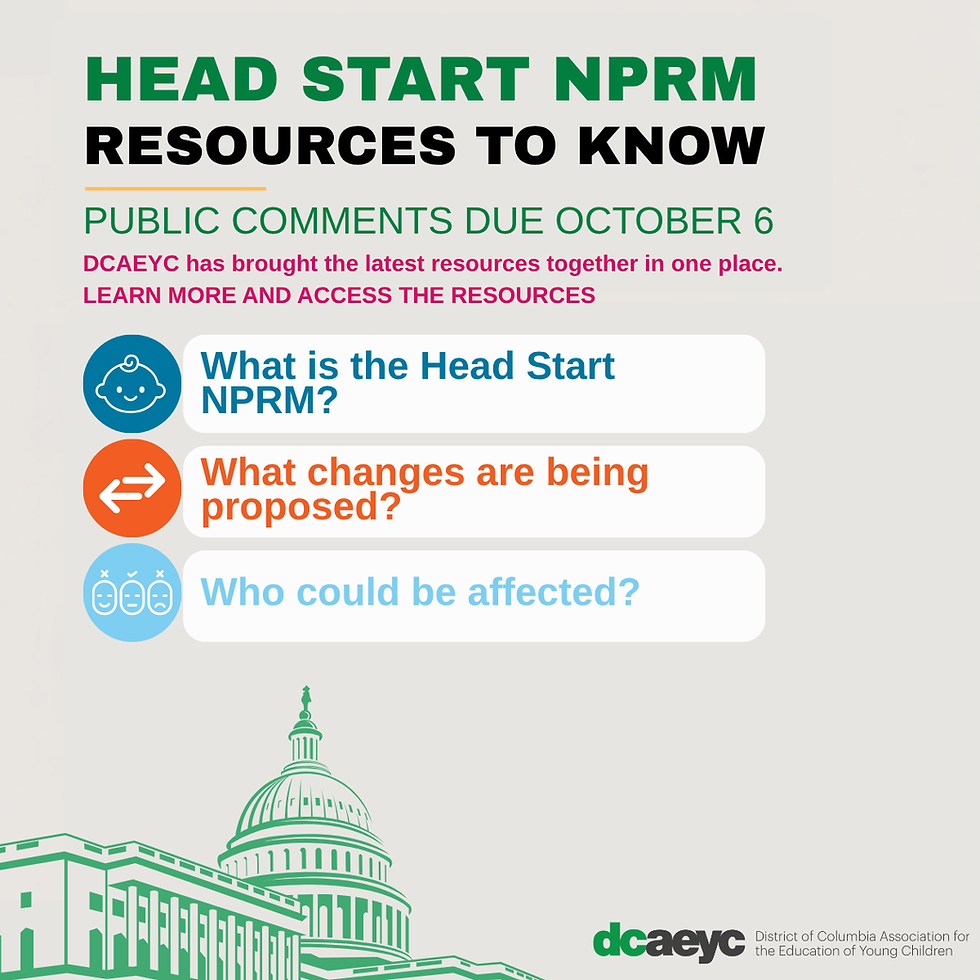
That framework is now under review. On August 7, 2026, the Administration for Children and Families released a Notice of Proposed Rulemaking that would make significant changes to the Head Start Program Performance Standards. The proposal is not final, and the public comment period remains open through October 6, 2026. This gives early childhood education professionals, families, advocates, program leaders, and community members an opportunity to review what is being proposed and contribute their perspectives before a final rule is issued.

The reach of Head Start helps explain why this matters. In Fiscal Year 2024, Head Start was funded to serve 715,873 children and pregnant women nationwide. Since its creation in 1965, the program has served more than 40 million children and their families. Federal data from the 2023 to 2024 program year also show the range of children and families served. Approximately 35% of enrolled children were dual language learners, 15% of cumulative enrollment included children with disabilities, and 96% of children had health insurance by the end of the program year. Approximately 84,000 families received services related to job training or adult education.

These numbers reflect the comprehensive role Head Start plays in communities. The current Head Start Program Performance Standards address areas including child screenings and assessments, health and mental health services, safety practices, family engagement, staff qualifications and professional development, and services for children with disabilities. Together, these requirements help create consistency in how programs support children and families while allowing services to be delivered within local communities.
In Washington, DC, this is also a local issue. In Fiscal Year 2024, federally funded enrollment in the District included 424 Head Start Preschool slots and 1,698 Early Head Start slots, for a combined 2,122 funded opportunities for children and families. These programs are part of the broader early childhood education system in the District and are connected to the professionals, families, and organizations that support young children every day.

NAEYC’s analysis of the proposed rule highlights several areas where the current federal framework could change, including staff-to-child ratios and group sizes, qualifications for certain Head Start roles, health and mental health requirements, supports for dual language learners, professional supports for educators, and the extent to which programs would rely on individual state requirements rather than federal standards. These are not abstract policy questions. They can affect the daily experience of early childhood education professionals, the support available to families, and the level of individualized attention children receive.
For early childhood education professionals, ratios and group sizes influence how much time and attention can be provided to each child. Staff qualification and professional development requirements help shape expectations for the workforce and contribute to the quality and consistency of services. Health, developmental, and mental health requirements support programs in identifying needs and connecting children and families with appropriate resources. Family engagement standards help ensure that families remain active partners in children’s learning and development.
The federal rulemaking process provides an opportunity for the public to weigh in before changes become final. Public comments can help federal agencies understand how proposed regulations may affect programs, professionals, children, and families in practice. A comment does not need to be lengthy or technical. It can explain a professional experience, identify a potential impact, or describe why a particular standard matters in the daily work of supporting young children and families.
NAEYC has developed resources to help the early childhood community understand the proposal and participate in the public comment process. Readers can review NAEYC’s full explanation of the Head Start NPRM, learn more about how federal rulemaking works, use NAEYC’s public comment guidance, and review the proposed rule directly before submitting a comment.
Head Start has served children and families for generations. As decisions about its federal standards move forward, staying informed and participating in the public process are important ways to ensure that policymakers hear from the people who understand early childhood education through direct experience.
Public comments must be submitted by October 6, 2026.

Comments