
A Day Without DC Child Care Rally
Updated: Mar 21

On March 18, educators, families, advocates, and community leaders gathered at the Wilson Building for A Day Without DC Child Care, a public call to protect early childhood funding in the District. The rally came at a moment of growing alarm across the field, just days after OSSE announced that new applicants to the child care subsidy program will be placed on a waitlist beginning May 12, citing continued enrollment growth and costs exceeding budgeted amounts. Public reporting has since underscored the scale of that gap.
The urgency of the rally reflected more than one policy concern. Advocates have warned that the combined impact of subsidy restrictions and threats to the Early Childhood Educator Pay Equity Fund would place even greater strain on programs, families, and the workforce across the city. Organizers described the potential consequences in direct terms: program instability, educators leaving the field, and reduced access for families who depend on reliable early childhood education in order to work.
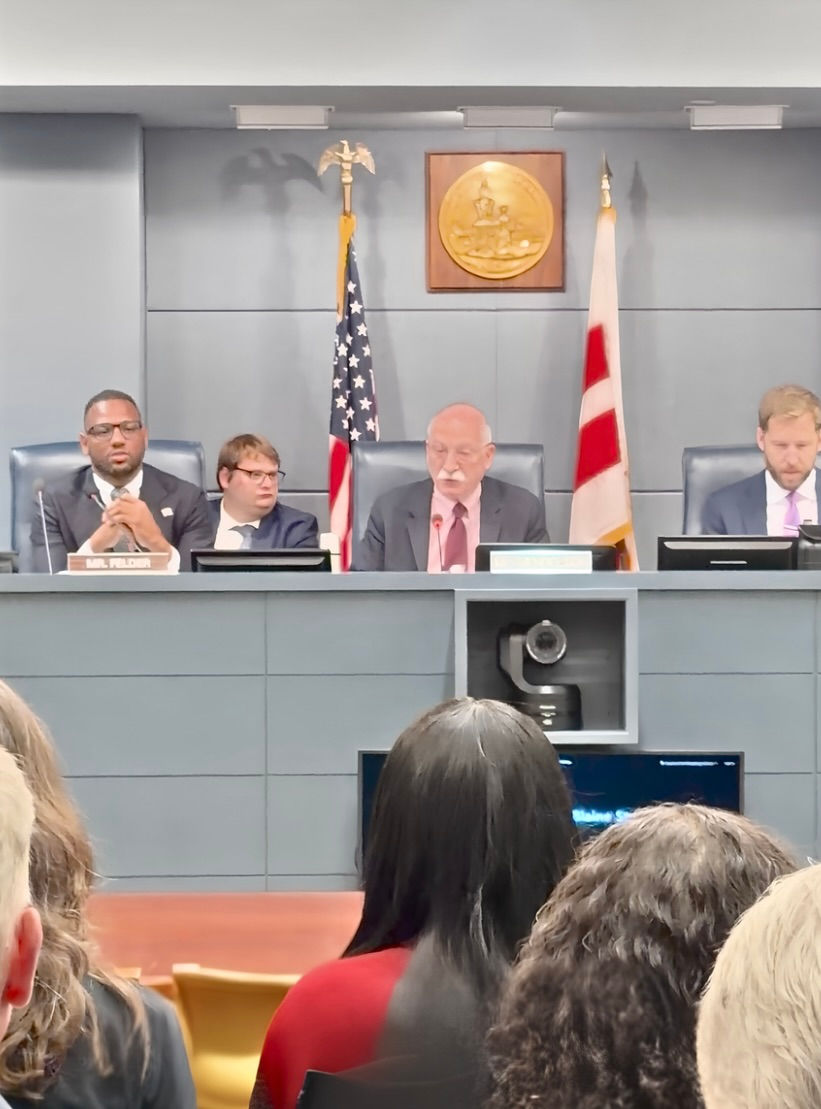
Several councilmembers also addressed the crowd during the rally, making clear that support for the early childhood community was being voiced publicly, not only by advocates but by elected officials as well.
Councilmember Janeese Lewis George thanked early childhood educators for the way they show up every day for children and said plainly that the city does not run without them. In her remarks, she framed the issue not as one of appreciation alone, but of whether educators are being given the wages, dignity, benefits, and support they deserve. She also grounded her comments in personal experience, sharing that her commitment to this issue was shaped by her Aunt Brenda, an early childhood educator who cared for children professionally while also carrying significant family responsibilities at home.
Councilmember Zachary Parker focused on the consequences of instability in the system. He warned that when centers close, families are directly affected, and he criticized the lack of clear answers about how the city would determine which families come off the subsidy waitlist or when that waitlist might reopen. On the Pay Equity Fund, he argued that the District should not walk away from a policy that has helped about 4,000 Black and brown women across the city earn better wages and remain in one of the country’s most expensive places to live.
Councilmember Christina Henderson placed the issue in a broader economic context. She said she was disappointed that advocates had to rally again for child care and noted that support for working families should be a core city priority. Drawing on a theme she said has shaped her career, she argued that child care cannot be treated as a narrow care issue. It is a workforce issue and an economic issue. If the District wants people to work, she said, families must have access to safe and dependable early childhood education. She also argued that any serious growth agenda for Washington must include child care and early childhood education as part of that plan.
Those public remarks gave the rally both urgency and political weight. They signaled that the concerns raised by educators and families are not peripheral, but central to the city’s economy, to family stability, and to whether Washington is willing to sustain the workforce it depends on.


After the Rally, the Advocacy Continued Inside City Hall
After the rally, DCAEYC spent the rest of the day in meetings with councilmembers and their staff, carrying that urgency directly into policymaking spaces. Those conversations focused on what the proposed cuts would mean in practical terms for educators, for programs already under pressure, and for families who rely on a functioning early childhood system.
The most consequential conversation came later, in a closed-door meeting with staff from Mayor Muriel Bowser’s Office of Community Affairs. That meeting did not lessen the seriousness of the threat facing early childhood funding. But it did clarify one critical point: the budget is not yet finalized. DCAEYC and other advocates were told there is still time in the process, and still an opportunity to push back against the proposed full cut to the Early Childhood Educator Pay Equity Fund.
That point matters because the District’s FY27 budget process is still underway. The Council’s published budget schedule confirms that hearings and review are part of the current budget cycle, which means the outcome is not yet fixed and advocacy remains timely.
The broader context makes that window especially important. OSSE’s March 13 waitlist policy states that the change is intended to prevent further increases in subsidy program costs above budgeted amounts and to support continued operation of the program. The Washington Post reported that the subsidy program is projected to cost about $138 million against a $96 million budget, a gap that has intensified concern throughout the early childhood sector.
For DCAEYC, the significance of March 18 was not limited to turnout or visibility. It was in what happened after the rally, when public concern became direct advocacy inside the rooms where decisions are shaped.
DCAEYC Executive Director Berna Artis was part of those discussions throughout the day, pressing the case clearly and directly. The message was straightforward: early childhood cannot be treated as optional infrastructure. The District relies on this workforce. Families rely on it. Children rely on it. And if the city is serious about economic participation, educational stability, and equity, it cannot afford to dismantle one of the central supports holding this system together.
The rally brought urgency into public view. The meetings with councilmembers carried that urgency into direct policy conversations. And the meeting with the Mayor’s staff underscored the most important point of the day: the budget is still in motion, and the fight is not over. DCAEYC will continue advocating for a final budget that protects early childhood educators, supports families, and reflects the reality of what this city needs.


Comments