
What We Heard at Mayor Bowser’s FY27 Budget Engagement Forum

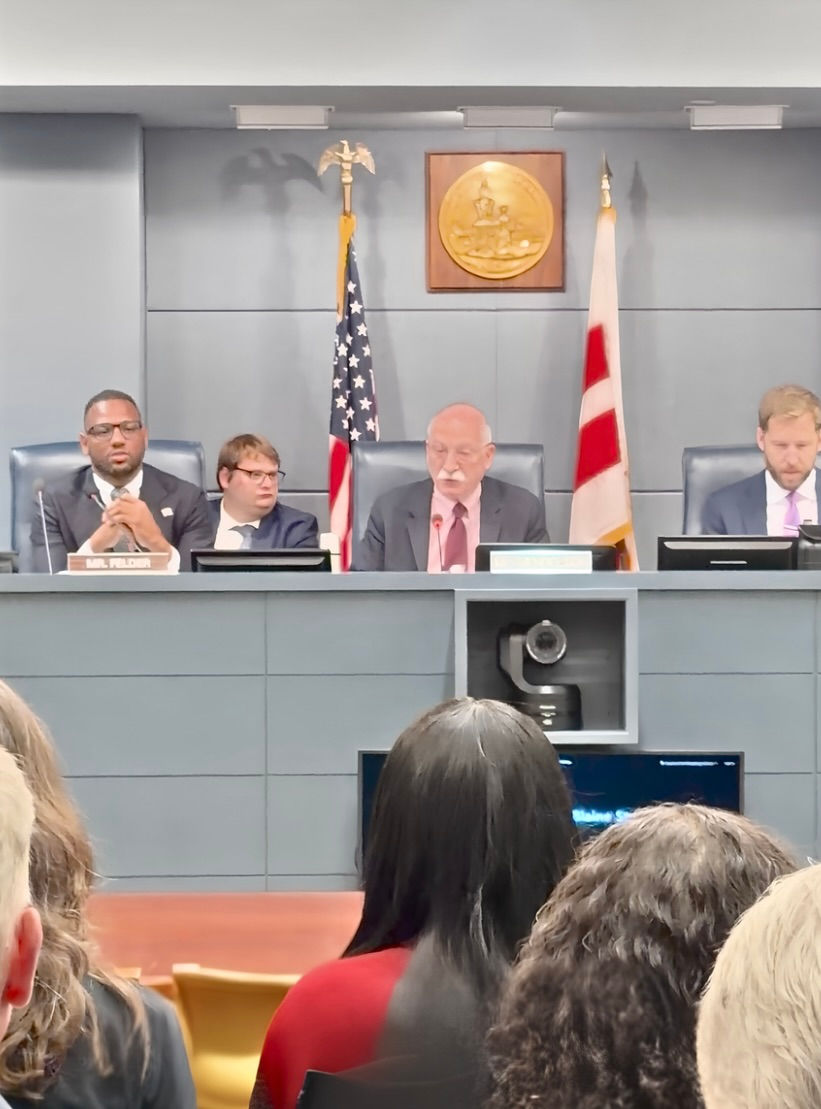
Last night, DCAEYC’s Executive Director, Berna Artis, attended Mayor Muriel Bowser’s FY27 Budget Engagement Forum to ensure early childhood education was represented in the room and in the conversations that followed.
Budget forums are often packed with competing priorities, tight timelines, and a lot of technical language. They are also where the public can hear, in real time, how decision-makers are thinking about what matters, what is urgent, and what is considered optional. For early childhood, this kind of visibility is essential.
A question that revealed a larger misunderstanding
During one exchange with a city official, a question came up that captured a common misconception: “Why can’t families just send their children to public school? We have Pre-K3 through 12th grade.”
It is a fair question on the surface, and it is also revealing. It assumes early childhood education is simply an entry point into K-12, rather than a distinct system with a distinct purpose.
Berna shared what families across DC already know. Public school is not the right fit for every child or every family. Families deserve options, and the District’s mixed-delivery system exists for a reason. It includes community-based programs, child development centers, family child care homes, and public schools, each serving children and families in different ways. That ecosystem supports access, continuity, and family choice, especially for working families who need full-day and year-round care.
Early childhood is not a smaller version of K-12
Early childhood education is relationship-based and developmentally specific. It is built around the needs of infants, toddlers, and young children, and the real-life schedules of families.
It is also a workforce support. When early childhood programs are stable and well-resourced, families can work, employers can retain staff, and communities can function.
That is why reductions in early childhood funding are not theoretical. They create immediate disruption. They impact early childhood care professionals, small businesses and community programs, and families who rely on stable, safe, culturally responsive care.
If we care about high school outcomes, we must invest earlier
Another comment shared during the forum was that high school education is a priority in the budget. DCAEYC agrees that it should be.
At the same time, we cannot ignore what research and lived experience make clear. A child’s success in high school does not begin in 9th grade. It begins at birth.
If we want strong graduation rates, workforce readiness, and long-term economic stability, we must invest in the earliest years, when brain development is at its peak and when equity gaps first emerge.
That includes investing in the people who make early learning possible. We need credentialed educators. To retain credentialed educators, we need stable compensation and professional treatment.
Why this matters right now
What became clear at the forum is that there is still a fundamental misunderstanding of how the early childhood ecosystem functions, and how fragile it can be without sustained investment.
This is exactly why advocacy matters. We cannot assume decision-makers fully understand our field. We must continue to explain it, illustrate it, and humanize it. We also welcome the conversation.
If you are a policymaker, budget analyst, or public official seeking to better understand how early childhood programs operate, how mixed delivery works, how funding flows, and how families actually experience these systems, we invite you to engage with us. Visit programs. Talk to educators. Sit with families. See the work up close.
Early childhood education is not a luxury line item. It is infrastructure, and infrastructure requires intentional, informed investment. DCAEYC will continue to show up, bring clarity to what is at stake, and advocate for the investments our children, families, and early childhood care professionals deserve.


Comments