
DC’s Early Childhood Education Field Brings Its Message to Council Members: Protect the Early Learning System!

At a rally that brought together representatives from across the District, including DCAEYC, DC Action, Under 3 DC, DC Fiscal Policy Institute, the DC Healthcare Alliance, Paid Family Leave advocates, revenue justice partners, and early childhood education leaders, participants carried a clear and urgent message to councilmembers: early childhood education, paid family and medical leave, health coverage, and revenue justice are deeply connected priorities in DC’s FY2027 budget. Together, they called on the DC Council to protect the programs that support children, families, educators, workers, and communities across Washington, DC.
The focus of the day was direct: fully fund the Child Care Subsidy Program at $177.1 million, restore the Early Childhood Educator Pay Equity Fund salary component at $94.2 million, protect Paid Family and Medical Leave, restore the DC Healthcare Alliance, and raise the revenue needed to support a stronger and more sustainable early learning system.
For the early childhood education field, the message carried particular weight. Speakers described how funding decisions are not abstract policy choices. They determine whether families can access early learning programs, whether classrooms can remain open, whether early childhood educators can afford to stay in the profession, and whether the District can continue building an early education system that reflects the needs of children and working families.

Materials shared during the advocacy day highlighted that fully funding the Child Care Subsidy Program would allow DC to continue serving all currently enrolled children, support approximately 7,900 children per month, prevent the need for an enrollment freeze or waitlist in Fiscal Year 2027, and help stabilize reimbursement rates received by programs. Without full funding, advocates warned that at least 1,900 families could remain on a waitlist or be locked out of early learning opportunities for at least one year. The consequences would extend beyond individual households, affecting employers, educators, classrooms, and the broader District economy.
The Pay Equity Fund was also central to the day’s conversations. Advocates emphasized that restoring salaries through the fund is essential to keeping qualified early childhood educators in classrooms. Without restoration, approximately 4,000 early educators could face pay cuts ranging from roughly $10,000 to $25,000. The result would not only be financial harm to educators. It could also deepen staffing shortages, increase turnover, force classroom closures, and reduce access to high quality early learning during the most important years of children’s development.
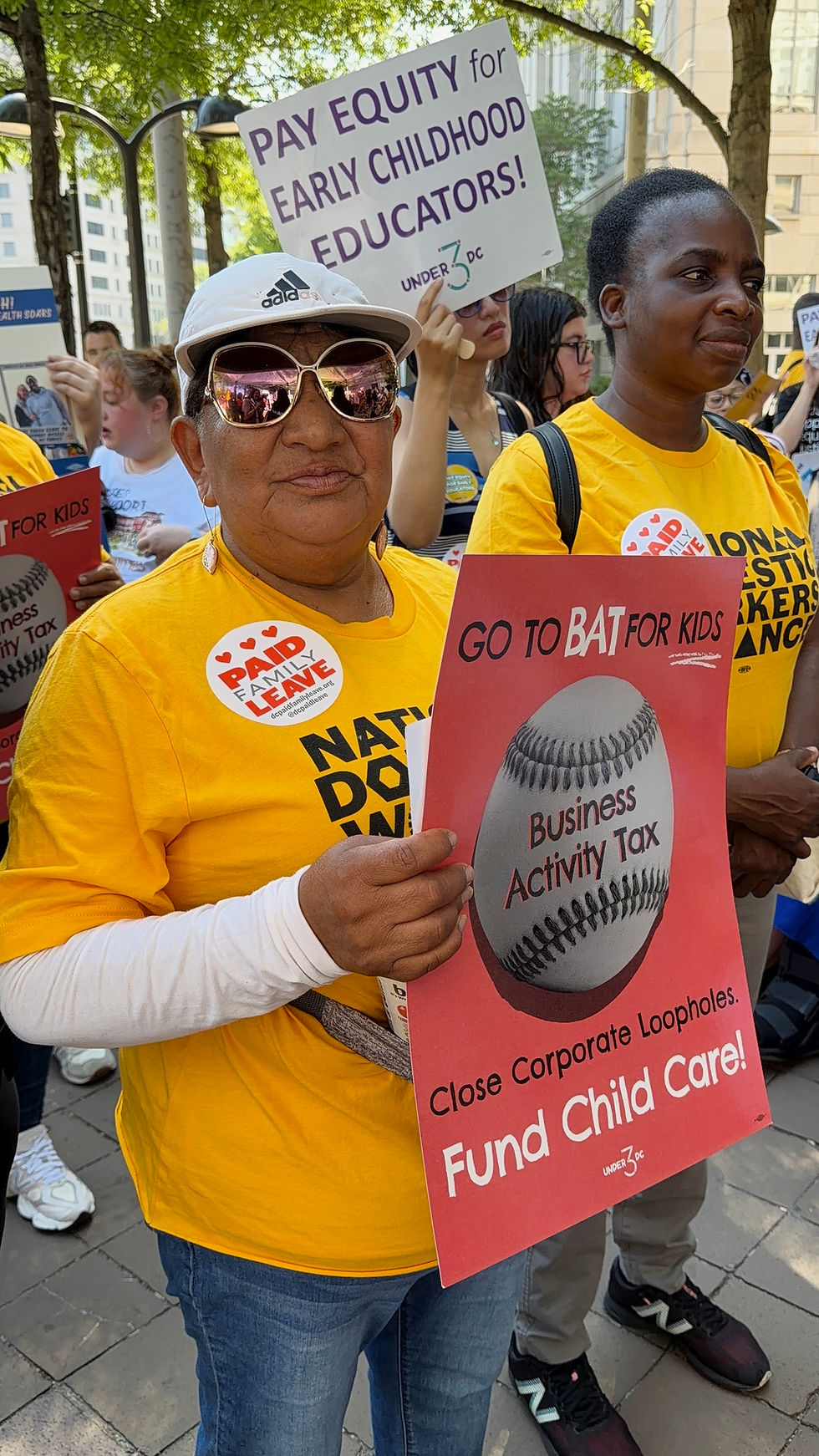
Throughout the rally and council meetings, the language from advocates was consistent and grounded in lived experience. Early childhood education professionals are doing skilled, demanding, essential work. Families rely on early learning programs so they can work, study, and remain economically stable. Children rely on consistent relationships with trained educators who understand their development, their needs, and their potential.
The advocacy materials also pointed to strong public support for these investments. Polling shared by Under 3 DC showed that nearly three quarters of DC voters support fully funding the Child Care Subsidy Program, while 69 percent support fully funding the Early Childhood Educator Pay Equity Fund. More than 8 in 10 voters expressed concern about proposed cuts to early educator pay. Among parents of young children under age 13, roughly 9 in 10 said maintaining funding for these programs is important.
That public support reflects what many in the room made clear to councilmembers: early childhood education is not a narrow issue. It affects family stability, workforce participation, children’s development, educator retention, and the health of the District’s economy.
The day also connected early childhood education to the broader network of public supports that families and workers rely on. Paid Family and Medical Leave was lifted up as a critical protection for workers facing illness, caregiving responsibilities, childbirth, recovery, and family medical needs. Personal stories shared through the advocacy materials included parents, caregivers, workers recovering from major surgery, families supporting loved ones during serious illness, and residents who relied on paid leave during some of the most vulnerable periods of their lives.
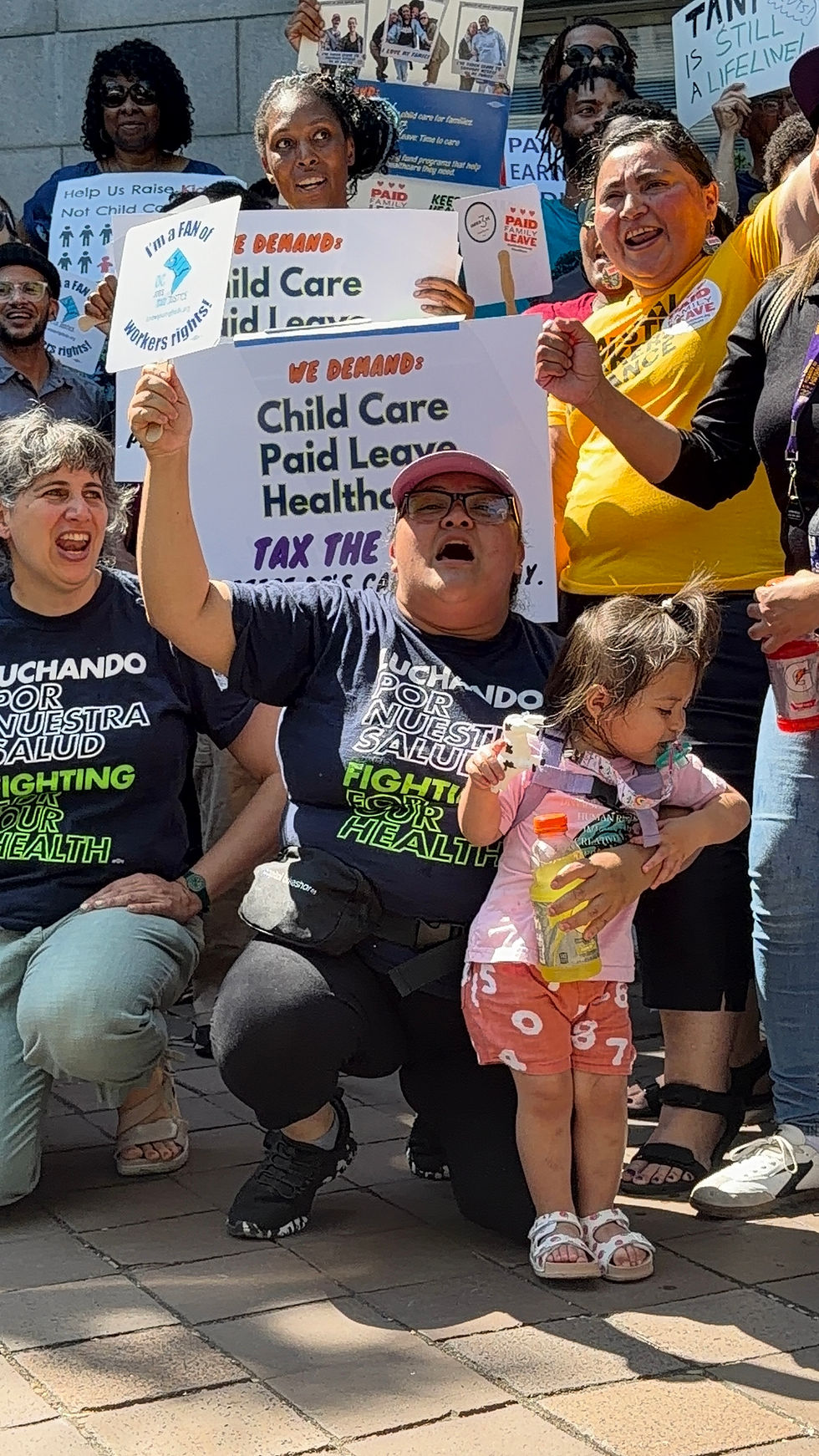
Those accounts reinforced a broader point: early learning does not exist in isolation. When family supports are weakened, children, educators, and programs feel the impact. A parent who loses access to an early learning program may lose the ability to work. An educator who faces a major pay cut may be pushed out of the profession. A worker who cannot access paid medical leave may be forced to choose between recovery and income. A family without health coverage may face deeper instability before a child ever enters a classroom.
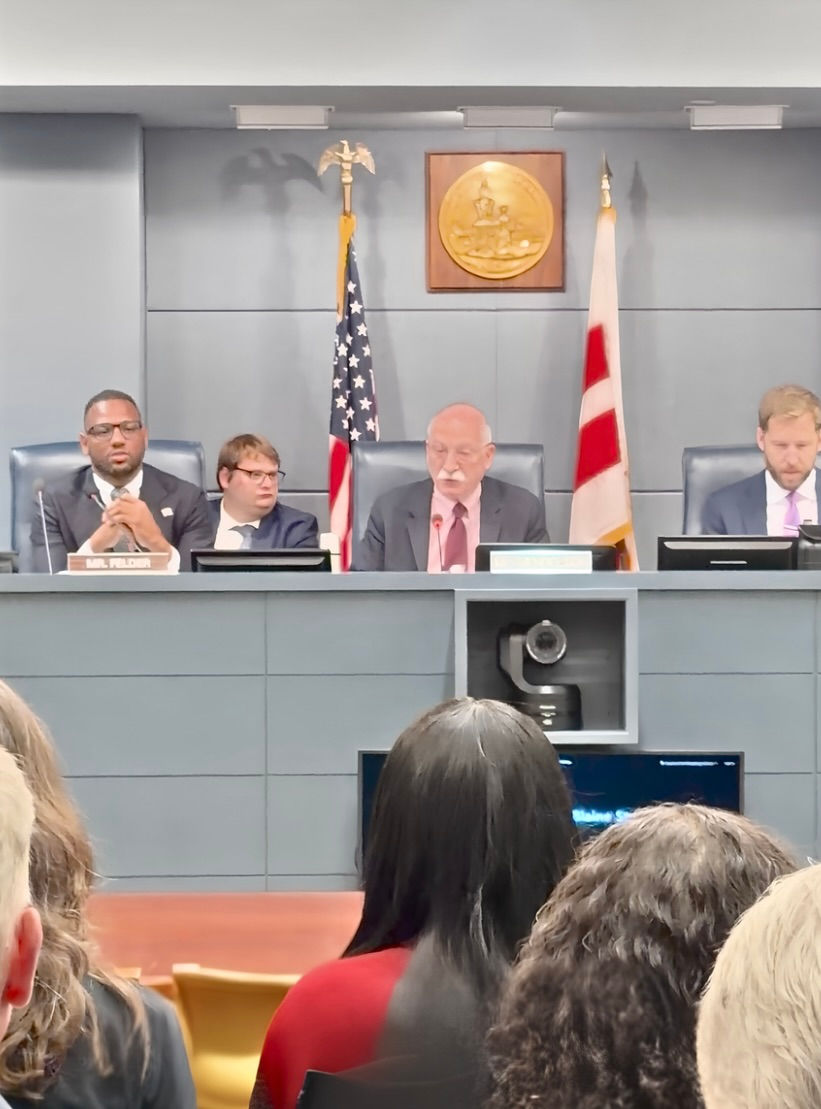
For DCAEYC, the rally reflected a central commitment: standing with early childhood education professionals and the children and families they serve. As Berna Artis and other leaders engaged with councilmembers, the call was not simply for budget restoration. It was for recognition, stability, and long term investment in the people who make early learning possible across Washington, DC.
At a time when the District is facing difficult budget decisions, advocates made the case that protecting early childhood education is one of the most responsible choices the Council can make. The costs of underfunding are immediate and measurable. Families lose access. Educators leave. Classrooms close. Programs become unstable. Children lose opportunities during years that shape lifelong learning and development.


Comments